Verified WaBanja Couple
Zelia Marote & Elian Kunda
An invitation for two
Location
 Lusaka, Zambia
When They Met
Matched on WaBanja
Milestone
Dating
Reading Time
~6 min read
“There were fourteen people at what Elian thought was our second date. To be fair, he had said he was bringing a friend. I had assumed he meant one friend, not the entire collection.”
There were fourteen people at what Elian thought was our second date. To be fair, he had said he was bringing a friend. I had assumed he meant one friend, not the entire collection.
It was a community quiz evening in the back room of a café. I had suggested it after we met through WaBanja because we both liked knowing unnecessary things. His profile had mentioned an interest in old photographs, and our first conversation somehow became a discussion about which household object would be most confusing to someone from a hundred years ago.
We had already met for an early evening drink. He had been funny, a little restless and attentive in a way that didn't feel rehearsed. I wanted to see him again. A quiz seemed easier than sitting across a table wondering whether our conversation could survive another two hours.
Then the friends arrived.
I had three of my own there. He kept greeting people. Someone pulled up an extra table. Someone else decided we were all one team, although the team limit was six. By the time the first question was read, Elian and I were sitting at opposite ends of a noisy arrangement that looked more like a committee meeting than a date.
We won nothing. We got a geography question wrong with enormous confidence. I spent most of the evening speaking to a woman who wanted recommendations for a tailor. Elian spent most of it trying to settle an argument about a film neither person had watched recently.
When I got home, he sent a message asking whether I had enjoyed myself. I said yes, because I had. Then I added that I still wasn't sure whether we had spent any time together.
His answer came the following morning. He said he thought I might prefer a group setting, and he hadn't wanted me to feel cornered into a serious date. I had chosen the event for exactly the same reason. We had been so determined to appear relaxed that we had arranged a situation in which neither of us had to risk much at all.
I asked him to meet me for a walk. Alone, I specified. He asked whether the quiz team would be offended.
Without the group around him, Elian was quieter. I hadn't expected that. He admitted that people often treated him as the person responsible for keeping an evening lively. He was good at it, which meant nobody noticed when he was tired of doing it. I knew the feeling. At family gatherings, I became the person who remembered everyone's drink and made sure the awkward cousin had someone to talk to.
We walked for almost an hour before either of us made a joke. It wasn't uncomfortable. It was unusual enough that I noticed it.
After that, we began keeping some of our time separate from everybody else. We went to an exhibition where he spent fifteen minutes looking at one small photograph. He came with me to buy a lamp and treated it like a serious expedition. I watched him read the instructions before assembling it, which I found unexpectedly attractive until he put one piece on backwards and refused to admit it.
Our friends noticed. Their interest was mostly kind, though kindness can become noisy when several people deliver it at once. They asked whether we were together before we had worked out what together meant. They wanted updates. At one gathering, someone announced that we looked like a married couple because we were disagreeing about where to put a chair.
Elian laughed. I laughed too, then became angry with him on the way home. I said I didn't want us turned into entertainment. He said he couldn't control what people said. Both statements were true, but neither answered the other.
The next day, we met to talk properly. I told him I needed to know that he would help me protect something that was still new. He told me he needed room to be awkward about that without being mistaken for someone who didn't care. He was used to defusing attention with humour. I was used to smiling until I went home and resented everybody.
We agreed on a boring sentence: “We're enjoying getting to know each other, and we'll share more when we want to.” We used it often enough that our friends began finishing it for us. Eventually, they found another subject.
There was no dramatic point at which we became a perfect private unit. We still liked people. We still attended birthdays, helped organise things and occasionally stayed too late because one of us had begun an interesting conversation near the door. What changed was our willingness to ask for an evening that belonged to nobody else.
Sometimes that evening was exceptionally ordinary. We ate leftovers. We watched half a film. I read while he sorted a box of photographs, telling me the story of each person until I pointed out that I had stopped being able to follow my book. He apologised, remained quiet for three minutes, then held up another photograph.
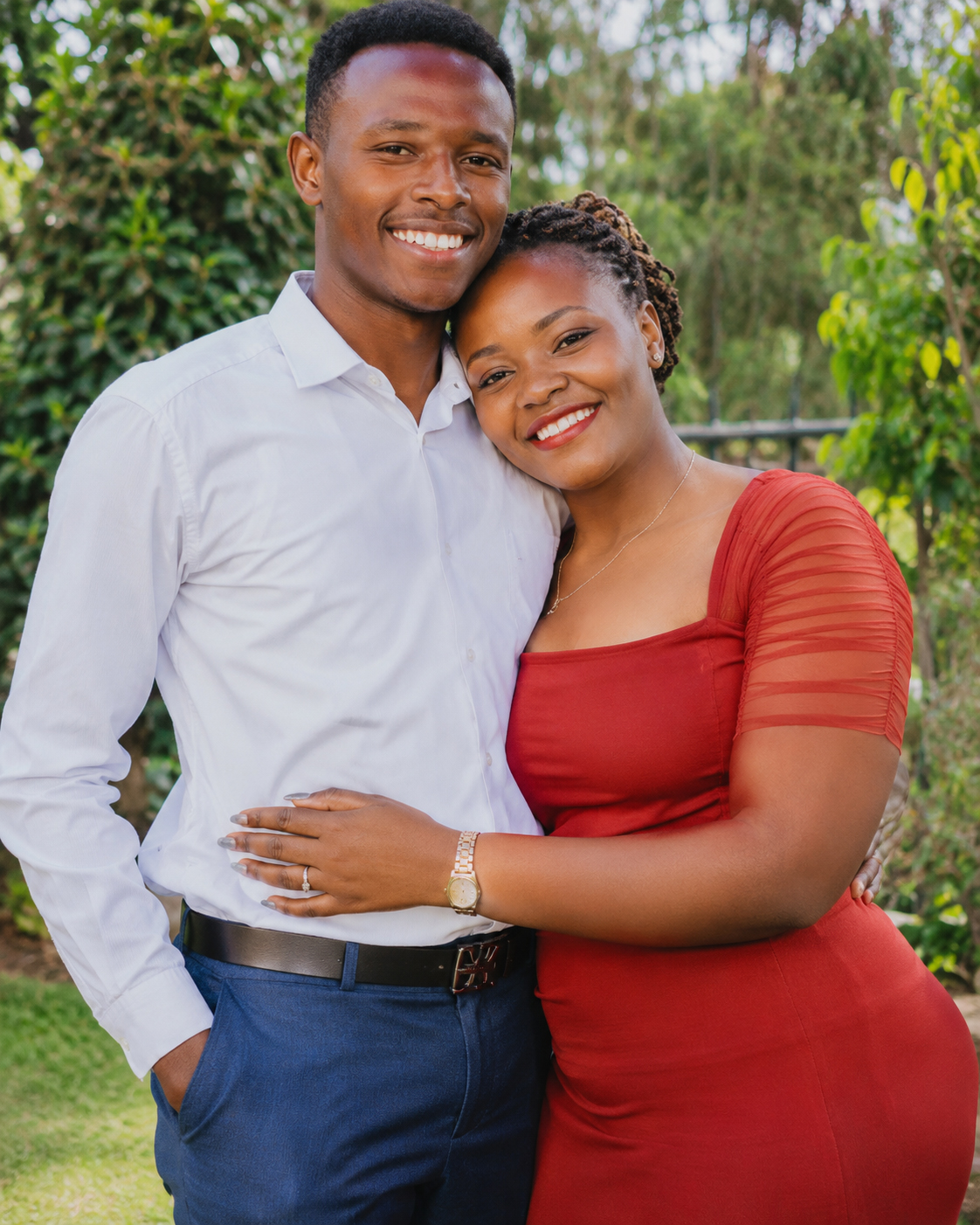
The picture in the garden was taken before a friend's celebration. I wore the red dress I had nearly returned because I didn't think I went anywhere suitable for it. Elian said a friend's party was suitable enough. He arrived in a white shirt, and I straightened his collar after he had already straightened it himself.
Someone called us over for a photograph. We were meant to face the camera. Instead, he said something about the first quiz night, and I turned towards him. That is the moment they caught.
I like that we are looking at each other rather than trying to deliver a good photograph. There was a whole party beyond the frame, with music and people we cared about. For a few seconds, we were not hosting anybody, explaining ourselves or making the evening work.
Later, we went inside and lost another argument about a film. This time, we were on the same side, and we had both actually seen it.